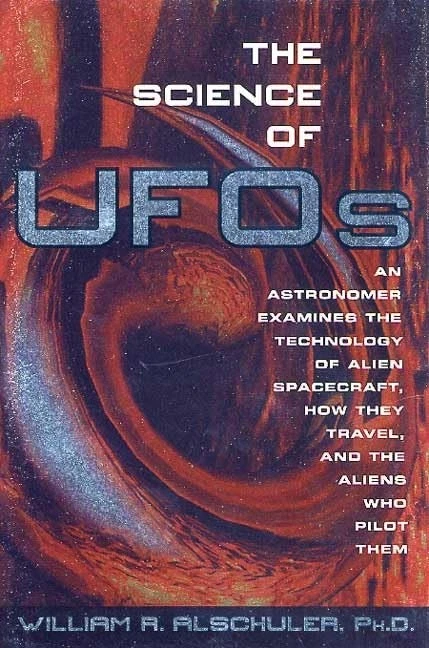
Dr. William R. Alschuler is an eminent American astronomer, museum consultant, and physics professor whose multidisciplinary career masterfully bridges advanced astrophysics, the history of optical technology, and popular science education. Alschuler formalized his world-class academic foundation by studying astronomy at Harvard University before earning his Doctor of Philosophy in Astronomy from the University of California, Santa Cruz. Driven by a lifelong dedication to instructing non-scientists, he built a legendary teaching tenure spanning fields such as geophysics, solar building design, and lasers, serving as a core science professor at the California Institute of the Arts and later as a Senior Adjunct Professor at the California College of the Arts. As a vital institutional innovator, he founded and serves as principal of Future Museums, a boutique consulting firm that has engineered cutting-edge science and art curricula for world-class establishments like the California Science Center and the Getty Education Institute. Alschuler vaulted into international mainstream prominence with his landmark book, The Science of UFOs: An Astronomer Examines the Technology of Alien Spacecraft, How They Travel, and the Aliens Who Pilot Them, published by St. Martin's Press. The volume achieved immense critical acclaim for utilizing the scientific method and known physics to dismantle and explain reported phenomena—such as anti-gravitation, faster-than-light travel, and interdimensional movement—without resorting to unverified pseudoscience. A prolific editor and contributor to landmark multi-author anthologies including The Microverse, Are We Alone in the Cosmos?, and The Ultimate Dinosaur, Alschuler is also a pioneering researcher in early color photography and holography, with his original holograms prominently exhibited in institutions like the Reuben H. Fleet Space Theater and Science Center. Moving through 2025 and into 2026, Alschuler continues to steer contemporary dialogues surrounding tech-driven education and global environmental action. Based in San Francisco, he remains an active voice on corporate advisory panels, where he leverages his latest 2026 academic treatise—focused on the historical restoration of 19th-century Lippmann photography processes—to advise digital image preservation initiatives on the preservation of early optical data structures.
This profile is awaiting source review; collected books are already linked below.